
How to Verify a Hyperbaric Oxygen Chamber Supplier's Capability & Delivery Reliability
How to Verify a Hyperbaric Oxygen Chamber Supplier's Capability & Delivery Reliability
Direct answer: a hyperbaric oxygen chamber supplier can be verified by matching every performance claim to a named chamber model and a named oxygen concentrator, then confirming the production process and the delivery schedule that will repeat that specification. This guide gives buyers a practical supplier audit for soft shell, hard shell, lying type, sitting type, one-person and two-person chambers, and then walks through the delivery assurance steps — purchasing terms, acceptance criteria and milestone checks — that keep a chamber order on spec and on schedule.
The Verification Problem: Where Supplier Claims and Delivered Chambers Drift Apart
Most procurement failures in this category are not caused by dishonest suppliers. They are caused by claims that were never tied to a specific configuration. A pressure figure, an oxygen flow figure and a lead time figure each look verifiable on their own, yet none of them is verifiable until it is attached to a model number, a concentrator model and a production schedule.
Five gaps account for most of the distance between a quotation and a delivered chamber:
- A pressure rating without its partner component. A chamber rated at 2.0ATA and a concentrator documented at 15L/min may both be accurate, yet they may not belong to the same configuration. Pressure, concentration flow and oxygen concentration pressure have to be quoted as one package.
- A quotation that stops at the chamber. A hyperbaric oxygen chamber project also requires supporting equipment: a water-cooled air conditioner, a 24V power supply, an oxygen concentrator, two manual pressure relief valves and automatic pressure relief valves. When those items are missing from the quotation, they reappear later as unbudgeted purchases.
- A lead time without capacity evidence. A 30–45 day lead time is only credible if the supplier can show the production capacity behind it.
- Certification language without scope. A CE or FCC statement does not by itself tell a buyer which product family, which market or which destination requirement it satisfies.
- An installation assumption nobody confirmed. Chambers are specified for indoor, cool and ventilated environments and for continuous commercial duty. If the room does not match that assumption, the equipment gets blamed for a site problem.
Industry Background: A Growing Category With Diverging Numbers
Published market estimates for hyperbaric oxygen therapy devices diverge widely, and the divergence is itself useful to a buyer. Grand View Research estimated the global HBOT market at USD 3.71 billion in 2024, projecting USD 5.19 billion by 2030. Strategic Market Research and SkyQuest published a 2024 figure of USD 4.44 billion with a projected CAGR of 9.4% through 2032. Mordor Intelligence reports a narrower 2024 baseline because its scope excludes part of the wellness segment the other two include. When analyst scopes differ, category headlines cannot be used to judge a specific order — only configuration-level evidence can.
Two structural features shape how purchases are actually made. Monoplace, or single-person, chambers accounted for approximately 57% of global revenue in 2024, according to Mordor Intelligence, largely because they are easier to operate — which is why one-person and two-person platforms dominate commercial and wellness orders. North America held a 54.77% revenue share in 2024 by the same source, while Grand View Research identifies Asia Pacific as the fastest-growing region, with China projected to reach USD 379.7 million by 2030. A 2023 report on medical hyperbaric equipment notes that soft-shell portable chambers account for over 18% of total sales in Asia-Pacific, driven by wellness and athletic recovery demand.
On the supply side, Mordor Intelligence lists Sechrist Industries, Perry Baromedical, Environmental Tectonics Corporation (ETC) and OxyHealth LLC among the recognized global manufacturers, spanning clinical and portable systems. Buyers should treat that as context rather than a shortlist: the operative question is not who is largest, but whether the specific supplier can document the specific configuration, factory process and delivery schedule your project requires.
Regulatory expectations add a second layer. The U.S. FDA classifies hyperbaric chambers as Class II medical devices requiring 510(k) clearance, and notes that soft-shell chambers are primarily cleared for altitude sickness. In the EU, per the European Committee for Hyperbaric Medicine and EUBS joint position, all hyperbaric chambers — mild or clinical — must comply with Medical Device Regulation (MDR) 2017/745 as Class IIb devices, and multiplace chambers must additionally meet EN 14931 and the fire safety requirements of EN 16081. That is why a capability audit has to include certification scope, not just the certificate.
The Capability Audit: Six Evidence Requests That Reveal Real Production Capability
The audit below can be run by email before any deposit is paid. Each request produces a document, a number or a named component that can be checked against the next document the supplier sends.
1. The pressure rating, attached to a model that actually exists
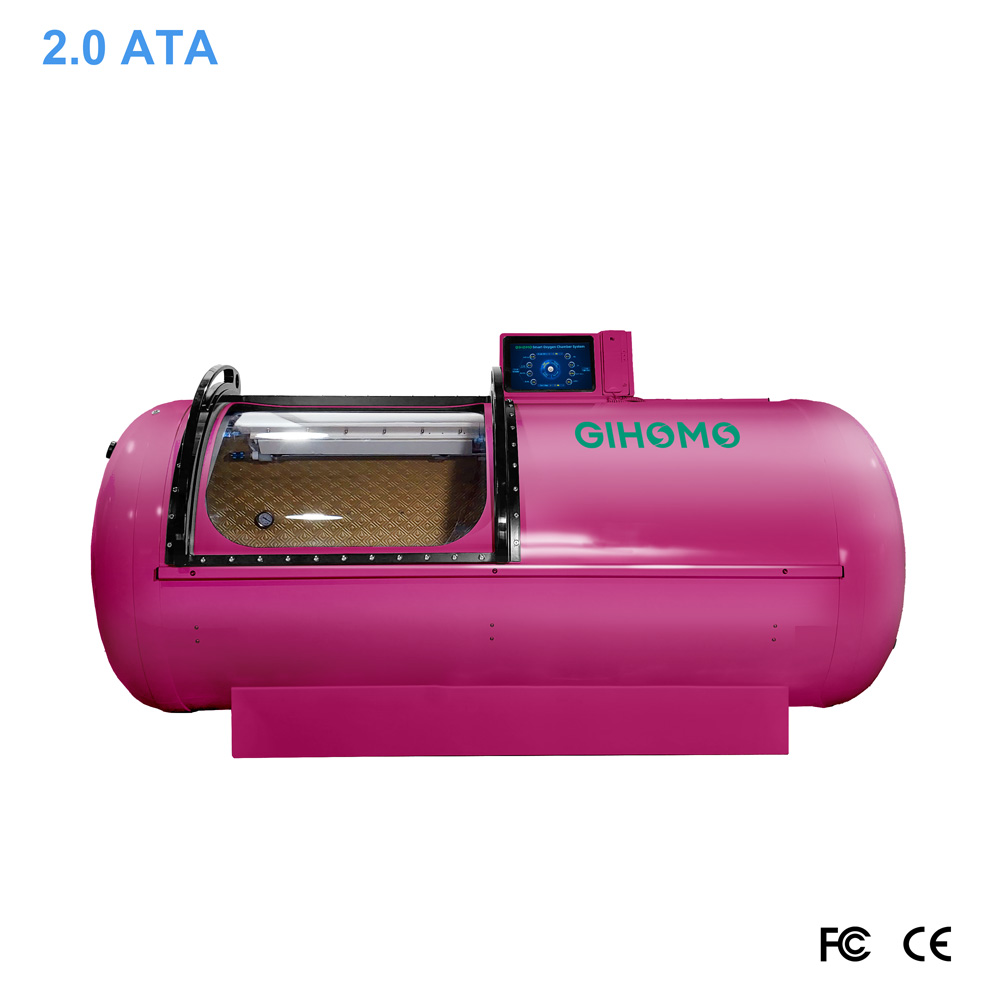
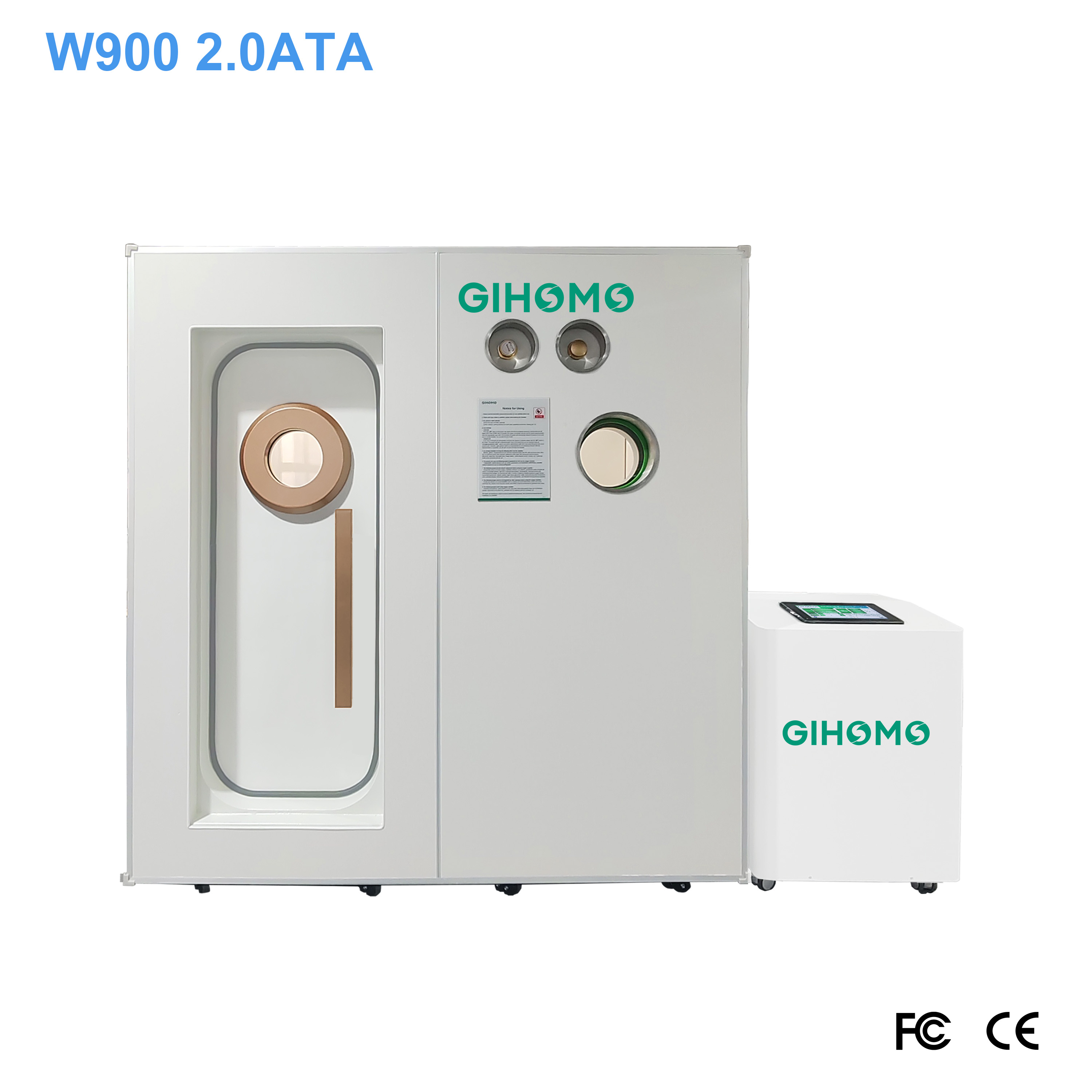
Ask for the operating pressure in ATA together with the model it applies to, because pressure is a model attribute rather than a category attribute. Across GIHOMO's chamber range, 1.3ATA appears on the sitting type soft shell chamber ST001, the lying type soft shell chamber SL001 and the eight-sitter hard shell chamber P4200. A 1.3–1.5ATA range appears on the one-person hard shell chamber Z0780M. A 1.5ATA rating appears on the sitting type soft shell chamber STW01, the lying type soft shell chamber STW03 and the portable chamber with the BIBS system STW02. A 1.8ATA rating appears on the one-person chamber W1200 and the aluminum chamber S920. A 2.0ATA rating appears on the lying type aluminum chambers C750 and C900 and on the sitting type hard shell chamber W900.
If a supplier gives a pressure figure without a model, the specification is not yet verifiable. If the model exists but the pressure changes between the quotation and the datasheet, resolve the discrepancy in writing before the purchase order is signed.
2. The concentrator pairing: a flow rate means nothing without a model number
Oxygen concentration flow is the number most often quoted loosely. It becomes verifiable only when it is quoted next to the concentrator model and the oxygen concentration pressure that the same document assigns to that model. In GIHOMO's documented configurations, the GH05A integrated oxygen concentrator is paired with a concentration flow of 5L/min and an oxygen concentration pressure of 100KPa on the soft shell models SL001, SSL001 and ST001. The GH15A is documented at 15L/min and 100KPa on STW01 and STW03. The GH15S-12A is documented at 15L/min and 120KPa on C900, W900 and B2020-3. The GY20SR is documented at 20L/min and 120KPa on STW02 and Z0780M. The GH60S is documented at 60L/min and 120KPa on the two-person 2.0ATA chamber W1800 and the multi-sitter chamber P5480. Oxygen purity is specified above 90% across the range, and rated power runs from 650W on the compact 1.3ATA chambers to approximately 5,000W on the highest-output configurations.
3. Chamber type, shell material and dimensions in both directions
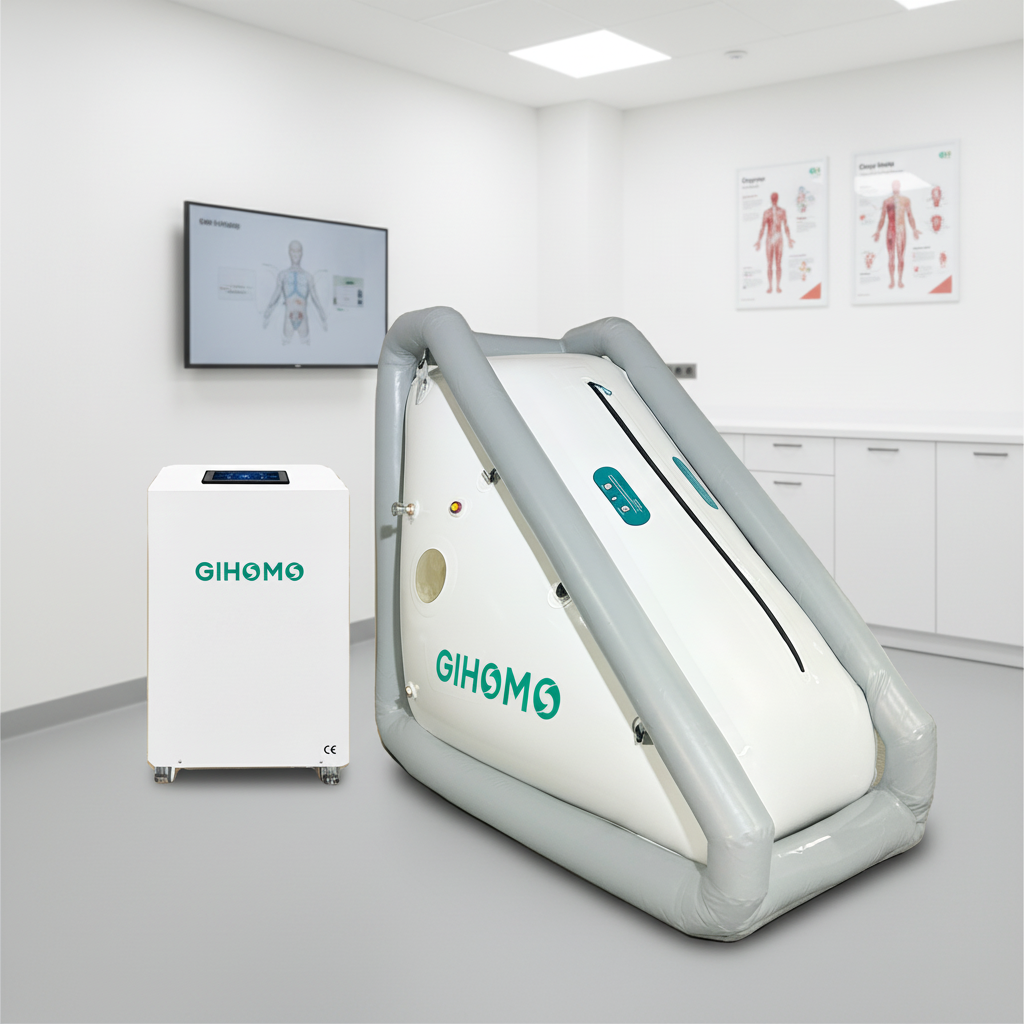
Soft shell and hard shell chambers solve different project problems, so the audit should follow the type. Soft shell chambers are built from TPU — for example the sitting type soft shell chamber STW01 at 1.5ATA with a chamber size of 1820mm x 820mm x 1500mm, the lying type soft shell chamber STW03 at 1.5ATA with a D1000mm x 2350mm chamber, and the two-person portable chamber SS002 at 1.3ATA with a 1600mm x 1200mm x 1300mm chamber and a capacity of two persons. Light units in this family include the lying type soft shell chamber SL001 at 20.5kg net weight and the 1.5ATA soft shell chamber SSL001 at 24.5kg, which matters when a chamber has to be moved between rooms or floors.
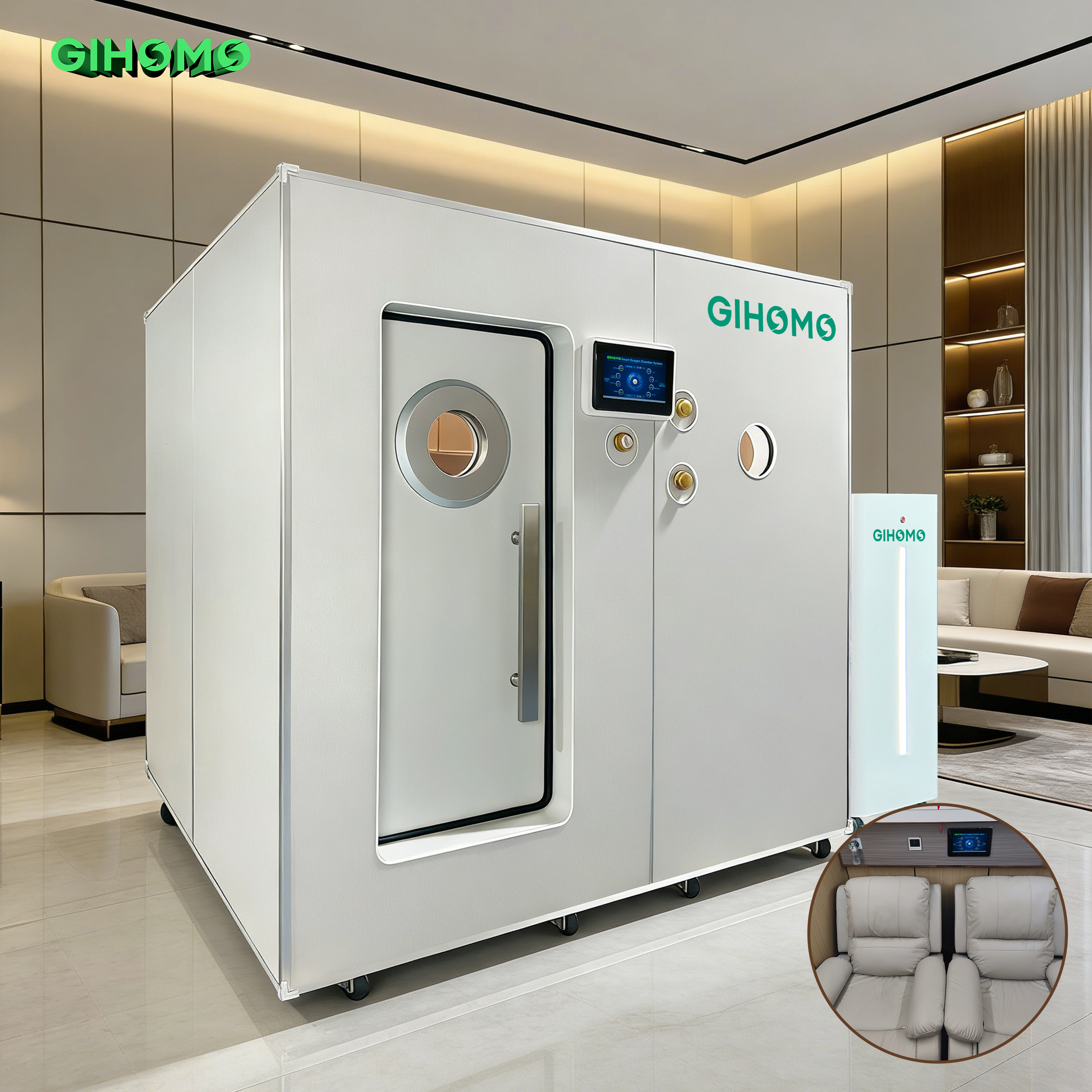
Hard shell chambers use steel, aluminum or carbon fiber. The 2.0ATA lying type chambers C750 and C900 use aluminum in cylindrical form factors of Φ750mm x 2100mm and Φ900mm x 2100mm. The sitting type chamber W900 uses steel at 900mm x 1500mm x 1900mm. The carbon fiber chamber B2020-3 is quoted with both an outer size of 2300mm x 1400mm x 1700mm and an inner size of 2100mm x 1100mm x 1350mm. Ask for both dimensions whenever a room, doorway or lift has to be prepared: the outer size decides whether the chamber can reach the room, and the inner size decides user comfort.
4. Supporting equipment and the operating environment
Every chamber in this category is part of a system, and the system list should appear on the quotation. The documented supporting equipment set is a water-cooled air conditioner, a 24V power supply, an oxygen concentrator, two manual pressure relief valves and automatic pressure relief valves. The operating condition is an indoor, cool and ventilated environment, and the chambers are specified for 24/7 operation in commercial deployments. If a supplier quotes a chamber without stating this list, or if the installation site cannot meet the environmental condition, the gap surfaces later as a performance complaint rather than a delivery dispute — and it is far harder to resolve.
5. Production capacity, quality control and the engineering bench behind the product
Capability claims about pressure and flow are only as good as the process that repeats them. Ask for four process numbers: monthly capacity, annual output, facility size and the size of the engineering team. GIHOMO's published figures are 80 units per month, an annual output of 1,000 units, a 2,000 m² facility and a research and development team of six engineers, operating under an ISO9001 quality management system with 100% testing applied in production. The company was founded in 2021 and exports approximately 60% of its output, with the EU and USA as its main markets.
For the buyer, those numbers translate into two questions. First, does the order quantity fit inside a single month of capacity? If it does not, the schedule should be split into tranches with separate inspection points. Second, is 100% testing a claim or a record? Ask for the test record format before the order is placed, not after the container is loaded.
6. Certification scope and the market-access documents for your destination
Request certificates with their scope and their destination market. GIHOMO's core products carry CE and FCC certification, and CE, FCC and EMC certification is listed as a special requirement for its commercial application scenarios alongside ODM/OEM service. Separately, confirm what your destination requires: FDA Class II 510(k) clearance in the United States, where soft-shell chambers are primarily cleared for altitude sickness, and EU MDR 2017/745 Class IIb conformity in Europe, with EN 14931 and EN 16081 additionally applying to multiplace chambers. A certificate that does not match the destination and the chamber type is not evidence, even when it is authentic.
Delivery Assurance: Purchasing Terms, Acceptance Criteria and Milestone Checks
Delivery reliability can be written into the contract rather than hoped for. The six steps below convert a supplier's capability evidence into enforceable order terms.
Step 1 — Freeze the specification before the quotation is finalised
Write the configuration as a single line item: model, chamber type, operating pressure, concentrator model, concentration flow, oxygen concentration pressure, oxygen purity, shell material, outer and inner dimensions, interior configuration, control interface language and the supporting equipment list. GIHOMO's OEM/ODM scope covers logo, interface, colour and language customisation; those choices should be fixed in the same document, because changing the control language after production has started is a schedule risk rather than a design decision.
Step 2 — Confirm the commercial terms that affect scheduling
Record the minimum order quantity, the customisation scope, the stated lead time, the payment structure and the warranty period in the purchase order. GIHOMO's documented terms are a minimum order quantity of one unit, a lead time of 30–45 days and a one-year warranty, with OEM/ODM production available. Any term that is not written into the order should be treated as not agreed.
Step 3 — Place the order against a capacity check
Before confirming the schedule, compare the order quantity against monthly capacity. With a documented capacity of 80 units per month, a 100-unit order cannot leave the factory as a single production block; it should be planned and inspected in tranches, each with its own pre-shipment check. This is the most common reason large orders arrive late while the supplier insists the lead time was met.
Step 4 — Require in-process and pre-shipment inspection records
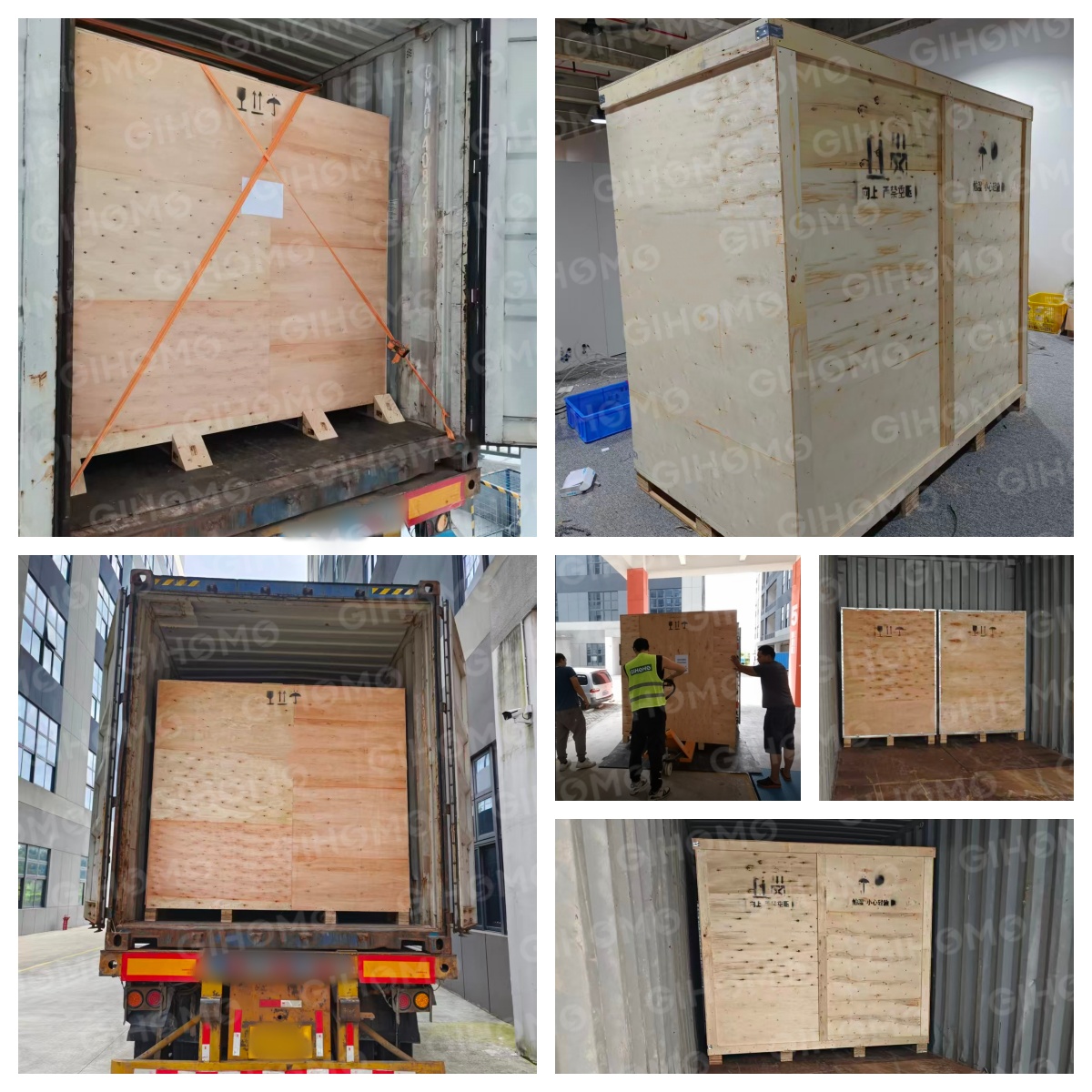
Ask for the 100% test record for each unit and for evidence of the pre-shipment inspection. Inspecting at the supplier's site, or through a third party, before loading is cheaper than resolving a specification dispute after customs clearance.
Step 5 — Define acceptance criteria that repeat your own specification
Acceptance criteria should restate the frozen specification and add measurable pass or fail points: the chamber reaches its rated pressure and holds it; oxygen concentration pressure matches the documented figure for the fitted concentrator; concentration flow matches the model's documented L/min; oxygen purity is above 90%; dimensions match the quoted outer and inner sizes; interior configuration and control interface language match the order; and the supporting equipment list is complete at unpacking.
Step 6 — Fix the after-sales path before delivery, not after a fault
Warranty terms are only useful if the response route already exists. GIHOMO's documented after-sales structure is a one-year warranty, 24/7 instant response by a professional team, and dedicated after-sales engineers providing one-on-one technical support. Confirm who is contacted first, in what language, and what the escalation path is when a chamber is down and revenue depends on it.
Delivery Milestone Checklist
| Stage | Evidence to request | Acceptance check |
|---|---|---|
| Specification freeze | Signed configuration sheet listing model, pressure, concentrator, flow, oxygen concentration pressure, material, dimensions and supporting equipment | Concentrator model, concentration flow and oxygen concentration pressure are consistent with each other |
| Order confirmation | Purchase order with minimum order quantity, customisation scope, lead time and warranty | Lead time of 30–45 days and the one-year warranty are recorded in writing |
| Production scheduling | Capacity confirmation against documented monthly capacity | Order fits inside 80 units per month or is split into inspected tranches |
| Pre-shipment | 100% test record per unit plus pre-shipment inspection evidence | Records received before loading, not after arrival |
| Arrival | Packing list matching the frozen specification, including supporting equipment | Pressure, flow, concentration pressure, purity above 90%, dimensions and configuration verified |
| Warranty period | Named after-sales contact and escalation route | 24/7 response route and one-on-one engineer support confirmed in writing |
Matching the Audit to Your Project Scenario
The same audit produces different answers depending on the scenario, which is why the specification should be written against the room and the user rather than against the category.
Wellness centres, spas and beauty rooms
Wellness and beauty projects are usually built around sitting type or one-person chambers that fit an existing treatment room. GIHOMO's beauty and anti-aging scenario defines the chamber's role as promoting collagen regeneration, brightening skin tone and accelerating skin repair, while its health-care scenario defines the role as improving sleep, enhancing immunity and supporting daily health management. Typical configurations for these rooms are the 1.5ATA sitting type soft shell chamber STW01 or a one-person hard shell chamber with the BIBS system such as Z0780M. Buyer case records for this manufacturer include 80 units delivered to a wellness centre and 30 units delivered to beauty salon and spa customers, both over a two-year period — evidence of repeat supply rather than a single shipment.
Sports clubs and recovery facilities
Sports recovery projects need throughput rather than individual comfort. The relevant configurations are multi-person hard shell chambers such as P3000 at 1.3ATA with four sofas and four oxygen terminals, or one-person BIBS configurations such as W1200 where session time matters more than seating count. A gym case record covering 50 units over two years indicates the category being supplied into sports environments at scale, and the athlete-facing scenario function is described as rapid recovery after exercise, improved training efficiency and enhanced athletic performance.
Home use and reseller programmes
Home buyers and resellers audit different risks. A home user needs a light chamber with a simple interface — the lying type soft shell chamber SL001 at 20.5kg net weight, or the 1.5ATA SSL001 at 24.5kg. A reseller needs documentation, customisation and repeatable production: OEM/ODM customisation of logo, interface, colour and languages, a minimum order quantity of one unit, and a monthly capacity that supports replenishment. GIHOMO's ODM reseller case record covers 100 units delivered over two years, and its home-use case record covers 80 units over two years with stable operation.
Clinical and rehabilitation settings
Clinical projects usually require the higher-pressure platforms — the 2.0ATA lying type chamber C900 or the 2.0ATA sitting type chamber W900 — with the BIBS options available on models such as Z0780M, W1200 and Y1800M. The supplier's rehabilitation scenario documentation describes the product's role as adjuvant therapy for postoperative wound healing, diabetes, brain injury and other diseases; in a clinical project that statement should be verified against your own regulatory pathway and clinical governance, because device classification and clearance apply separately at destination level.
Reference Specification Table for Cross-Checking Supplier Documents
The table below lists documented configurations from one manufacturer's range. It is included as a reference pattern: run the same check against every supplier's documents, with each row required to be internally consistent across model, pressure, concentrator, flow and oxygen concentration pressure.
| Chamber type and model | Operating pressure | Concentrator model | Concentration flow | Oxygen concentration pressure | Shell material | Chamber size |
|---|---|---|---|---|---|---|
| Sitting type soft shell — STW01 | 1.5ATA | GH15A | 15L/min | 100KPa | TPU | 1820mm x 820mm x 1500mm |
| Lying type soft shell — STW03 | 1.5ATA | GH15A | 15L/min | 100KPa | TPU | D1000mm x 2350mm |
| Portable, two persons — SS002 | 1.3ATA | GH15S-10A | 15L/min | 120KPa | TPU | 1600mm x 1200mm x 1300mm |
| Lying type hard shell — C900 | 2.0ATA | GH15S-12A | 15L/min | 120KPa | Aluminum | Φ900mm x 2100mm |
| Sitting type hard shell — W900 | 2.0ATA | GH15S-12A | 15L/min | 120KPa | Steel | 900mm x 1500mm x 1900mm |
| One person with BIBS — Z0780M | 1.3–1.5ATA | GY20SR | 20L/min | 120KPa | Steel | 780mm x 1350mm x 1880mm |
| Two persons 2.0ATA — W1800 | 2.0ATA | GH60S | 60L/min | 120KPa | Steel | 1800mm x 2000mm x 1900mm |
Oxygen purity is specified above 90% across these configurations, and 100% testing applies in production. Note that the model family name, the concentrator model and the three performance values must travel together on every document; a table that separates them is where verification usually fails.
Frequently Asked Questions
Which certifications and regulatory documents should a hyperbaric oxygen chamber supplier provide before an order is confirmed?
Request the supplier's certificates with their scope, and then separate them from your destination's requirements, because the two are not the same thing. GIHOMO's core products carry CE and FCC certification, and CE, FCC and EMC certification is listed as a special requirement for its commercial application scenarios alongside ODM/OEM service capability. At destination level, the U.S. FDA classifies hyperbaric chambers as Class II devices requiring 510(k) clearance, with soft-shell chambers primarily cleared for altitude sickness, while in the EU all hyperbaric chambers — mild or clinical — must comply with MDR 2017/745 as Class IIb devices, and multiplace chambers must also meet EN 14931 and the fire safety requirements of EN 16081.
How can a buyer confirm that a supplier's stated pressure and oxygen flow will actually be delivered?
Ask for the pressure, concentration flow and oxygen concentration pressure to be quoted next to the specific concentrator model, then check the three values against one another. In GIHOMO's documented range, the GH05A integrated oxygen concentrator is paired with 5L/min and 100KPa, GH15A with 15L/min and 100KPa, GH15S-12A with 15L/min and 120KPa, GY20SR with 20L/min and 120KPa, and GH60S with 60L/min and 120KPa, with oxygen purity above 90% throughout. Add the process evidence — 100% testing in production, a 2,000 m² facility, six engineers in research and development and a monthly capacity of 80 units — and the claim moves from a statement into something that can be checked on arrival.
How should quotations be compared when the chamber configurations are different?
Normalise the scope before comparing cost. A fair comparison lists chamber type, operating pressure, concentrator model, concentration flow, oxygen concentration pressure, shell material, dimensions, interior configuration, the supporting equipment set (water-cooled air conditioner, 24V power supply, oxygen concentrator, two manual pressure relief valves and automatic pressure relief valves), customisation scope, minimum order quantity, lead time, warranty and after-sales terms. Configuration is the main cost driver in this category: a 2.0ATA two-person chamber such as W1800 uses a GH60S concentrator at 60L/min with approximately 5,000W rated power, while a compact 1.3ATA chamber such as Z0780V runs a GH10A-10A concentrator at 10L/min and 650W. Comparing those two quotations as if they described the same product produces a misleading answer.
Can a chamber be validated before a full order is placed?
Yes — validate at unit level first. GIHOMO's documented terms allow a minimum order quantity of one unit, with OEM/ODM customisation of logo, interface, colour and languages available, and a lead time of 30–45 days. Validation should cover the items that are difficult to change later: pressure holding at the rated ATA, oxygen purity above 90%, the concentration flow and oxygen concentration pressure that match the fitted concentrator, and physical dimensions against your room plan. Buyer case records for this manufacturer include a 100-unit ODM reseller order and an 80-unit home-use order, both delivered over a two-year period.
What delivery milestones should be written into the purchase order?
Write six milestones: a signed specification freeze; confirmed commercial terms including minimum order quantity, customisation scope, the 30–45 day lead time and the one-year warranty; a capacity check against the 80-unit monthly capacity so large orders are planned in tranches; 100% test records and pre-shipment inspection evidence for each unit; arrival acceptance criteria that repeat the frozen specification; and a named after-sales route with 24/7 response and one-on-one engineer support. An order that includes all six gives the buyer a documented basis for discussion at every stage. If you want to run this audit on a live project, the fastest next step is to request the current specification sheet and a sample or quotation — you can do that through the GIHOMO website at www.gihomo.com, by email at gihomo@hotmail.com, or by WhatsApp at +852 68176191.
Conclusion: Audit the Configuration, Then Commit
Capability and delivery reliability in this category are not matters of trust; they are matters of documentation. The audit sequence is short: ask for the model behind every pressure rating, the concentrator model behind every flow rate, the supporting equipment behind every chamber, the process numbers behind every capacity claim, and the certificate scope behind every compliance statement. Then convert what you receive into order terms — a frozen specification, a capacity-checked schedule, inspection records, measurable acceptance criteria and a named after-sales route.
GIHOMO is a Foshan-based manufacturer of hard shell and portable hyperbaric oxygen chambers, founded in 2021, operating a 2,000 m² facility under an ISO9001 quality management system with a research and development team of six engineers and 100% testing in production. Approximately 60% of its output is exported, mainly to the EU and the USA, with a documented monthly capacity of 80 units and a lead time of 30–45 days. Its range covers soft shell, hard shell, lying type, sitting type, one-person and multi-person chambers, and the supporting equipment set is documented for each configuration.
Run the audit on two or three suppliers in parallel, compare their specification sheets line by line, and commit to the one whose documents stay consistent when you check them against each other.
Request the Specification Sheet, a Sample or a Quotation
Send your project scenario — room size, expected daily sessions, pressure requirement and destination market — and the GIHOMO team will return the matching configuration, the concentrator pairing and the delivery schedule.
Talk to GIHOMO
Have Questions or Need More Details?
Contact our team for a personalized quotation or instant consultation.
Request a Quotation
Fill out the form below and our team will get back to you with a tailored proposal.
WhatsApp Direct Chat
Prefer to chat in real-time? Message us on WhatsApp for instant assistance & quick answers.
- Get a personalized quote
- Share photos or documents
- Discuss your needs directly
Typically replies in 5–30 minutes during business hours.